
You can be packed on a Saturday night, your servers hustling, your kitchen firing on all cylinders, and still wake up Monday wondering: “Where did the money go?”
The answer usually hides in your food costs. Understanding where every dollar spent on ingredients goes, and how it stacks up against your revenue, is crucial for restaurant food cost control.
If you’ve ever felt like you’re working too hard for margins that are too thin, this is for you. Let’s dive in.
What Is Food Cost Percentage & Why It Matters
Food cost percentage is one of the most important numbers in your business. It shows you exactly what portion of every sales dollar is being eaten up by ingredients.
For most owners, the sweet spot falls between 28% and 35%, though it varies depending on your concept. A fine-dining steakhouse will naturally sit at the higher end, while a quick-service taco shop should aim lower.
Why does this matter? Because even if your food cost creeps just 2–3% above target, you’re losing thousands each month.
Calculate the Cost of Goods Sold (COGS)
To fully understand your food costs, you’ll need to calculate your Cost of Goods Sold (COGS). Think of COGS as your profit leak detector. It shows you exactly how much it really costs to put food on your guests’ plates, not what it should cost on paper.
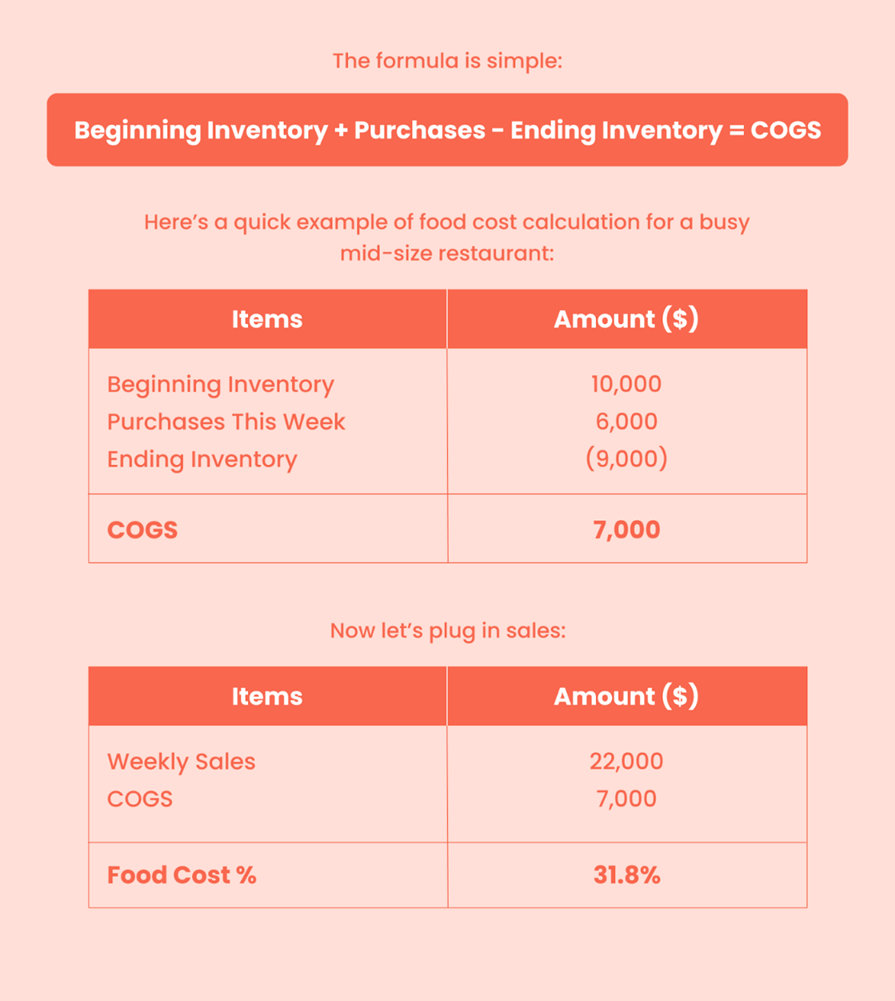
Mastering food cost percentage and COGS gives you what every operator wants: clarity. And clarity means faster decisions, tighter margins, and a restaurant that runs with intention, not guesswork.
Inventory & Waste Management: Tighten the Leaks
Once you’ve nailed down your food cost percentage, the next step is plugging the leaks that quietly drain your margins: poor inventory habits and hidden waste.
For many operators, it’s not that sales are too low; it’s that dollars are disappearing into walk-ins, prep bins, and oversized portions. Tightening up here is where real profit control begins.
Implement Flash Inventory Checks
If you’re still doing inventory once a month, you’re flying blind. Weekly counts should be your standard, and for high-cost or perishable items, daily “flash counts” are the safety net. These quick spot checks take minutes yet prevent costly surprises like running out of salmon mid-service or tossing spoiled avocados. Treat them like an early warning system: the sooner you catch the problem, the cheaper it is to fix.
Portion Control as a Profit Lever
Inconsistent portions seem harmless until cases of product disappear faster than sales can justify. When portions vary, you’re basically giving away free food. And over a year, that generosity can cost thousands in profits.
Standardizing portions with portion scoops, scales, or pre-cut proteins ensures guests get the quality they expect while you protect your margins.
Engineer Your Menu for Profitability
Once you’ve tightened up inventory and portion control, the next lever to pull is your menu itself. When used strategically, your menu becomes one of the strongest profit drivers in your business. With a few smart adjustments, you can steer guests toward high-margin items without them even realizing it.
Menu Matrix: Stars, Plow horses, Puzzles, Dogs
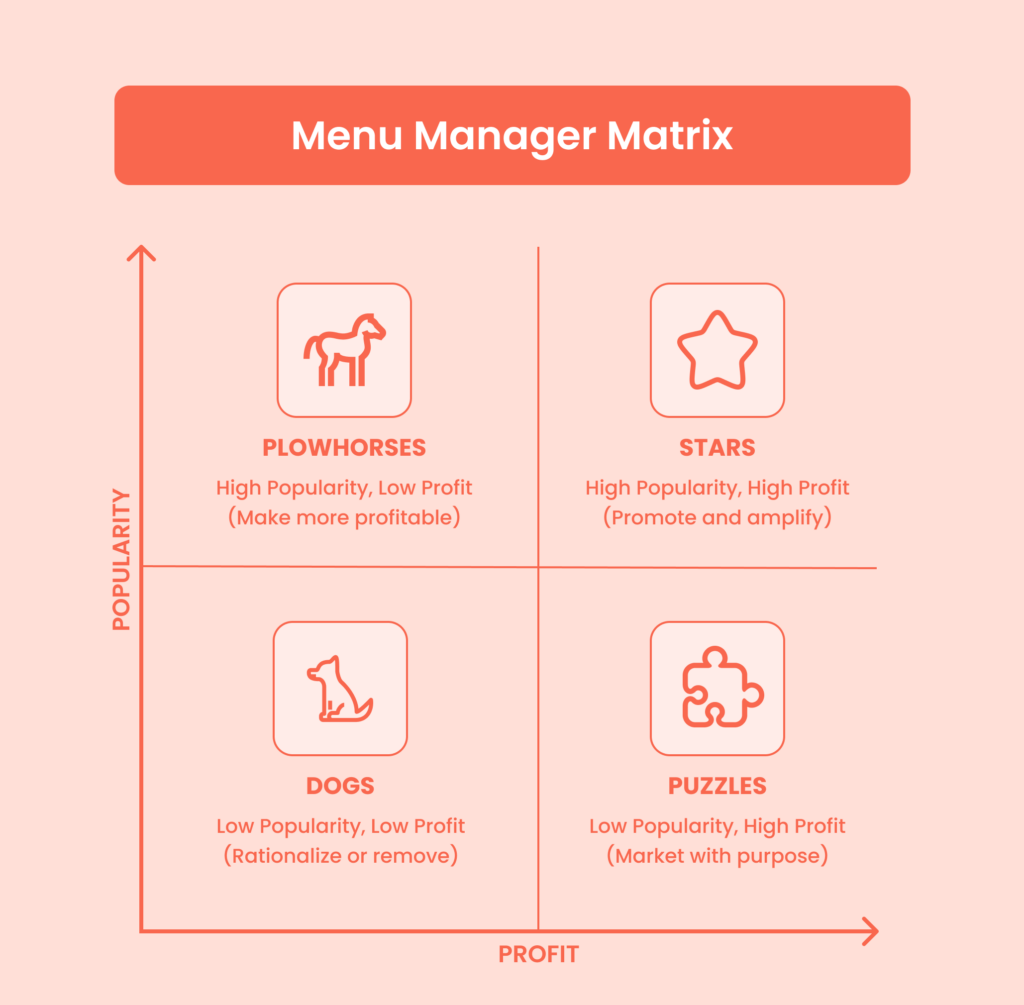
Every dish falls into one of four buckets: Stars (popular and profitable), Plow horses (popular but low profit), Puzzles (popular but low profit), and Dogs (low profit and low popularity).
Knowing where each dish lands gives you a roadmap: spotlight Stars, rethink Puzzles, trim Plow horses, and cut Dogs altogether. It’s how you stop guessing and start using your menu as a profit plan.
Price Setting Based on Cost, Value & Psychology
Pricing isn’t math, it’s science. Sure, you need to cover your food costs, but guests also respond to perceived value and subtle cues like “anchor pricing” (placing a high-ticket item next to your target dish to make it feel like a better deal). By balancing cost analysis with behavioral insights, you can set prices that keep guests happy while lifting your margins.
We’ve broken down the full science of menu engineering here, if you’d like a step-by-step playbook.
Align Operations with Profit Strategy
Even the best restaurant cost controls will fall flat if they’re not supported by the rest of your operation. For owners, this usually means dealing with two equally stubborn profit-killers: waste and labor. Taming these often makes the difference between surviving month-to-month and scaling.
Waste Reduction as ROI
Think about it: every onion that spoils in the walk-in, every over-poured glass of wine, every plate that comes back half-eaten, it’s money straight out of your pocket. By logging waste daily and tightening up prep habits, you’re creating an immediate return on investment.
The fix is simple: log waste daily, tighten prep, and hold staff accountable. And if you’re ready to take it a step further, tech can help. Check out how AI helps with restaurant waste management to understand how smart systems can cut waste before it starts. Unlike marketing campaigns or big renovations, waste reduction puts profit back in your pocket overnight.
Labor & Overhead: The Complement to Food Cost
Restaurant food costs are just one part of the profitability triangle. Labor and overhead are the other two, and they can undo all your progress if left unchecked. Maybe your team is staffed heavily on slow nights but stretched thin on weekends. Maybe your utilities and rent are eating up margins faster than your menu can make them back.
The truth is, you can’t control food costs in isolation. You need to look at the big picture. Align schedules with sales, cross-train staff, and watch fixed costs with the same vigilance as inventory. That’s how you build a full-margin strategy, not a patchwork fix.
Master Your Supply Chain
For many owners, food costs swing not because of poor planning, but because vendor pricing and quality changes overnight. The truth is, your supply chain is as much a profit lever as your menu or labor schedule, and the operators who treat it that way are the ones who handle inflation and shortages without panicking.
Negotiate with Suppliers & Commit to Volumes
Suppliers value consistency. If you’re placing random, fluctuating orders, you’ll pay whatever the market dictates. But if you can commit to steady volumes, you gain leverage.
Volume deals, bulk discounts, or locked-in pricing agreements give you predictability, and predictability means stable margins. Don’t be afraid to negotiate; vendors want your repeat business as much as you want reliable costs.
Seasonality & Local Partnerships for Stability and Freshness
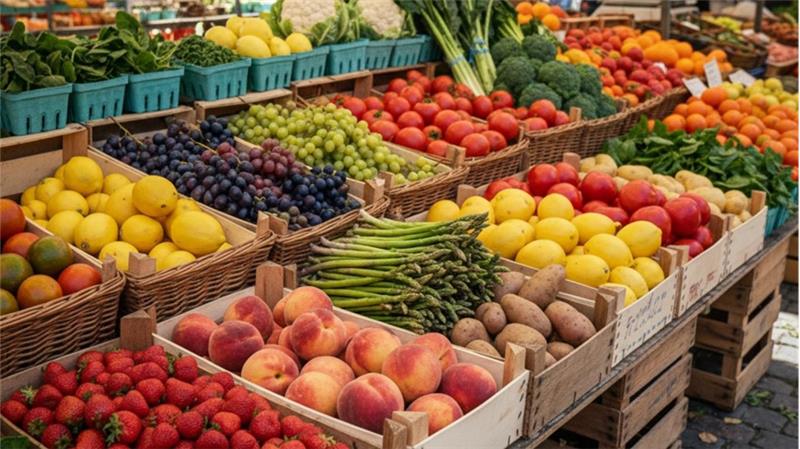
Sometimes the smartest play is sourcing closer to home. Building relationships with local farms, fisheries, or co-ops gives you fresher ingredients at lower costs, especially during peak season when supply is high.
Seasonal sourcing lets you design specials that align with availability, reducing reliance on expensive imports and insulating you from supply chain shocks. Plus, “locally sourced” resonates with today’s guests, giving you a marketing edge while you control restaurant costs.
Embrace Smart Tools & Technology
Once your supply chain is under control, the next step is ditching the pen and clipboard. Too many owners still wrestle with spreadsheets, late-night inventory counts, or surprise shortages that throw off service. In today’s fast-paced restaurant industry, technology steps in to do the heavy lifting, finally giving you the clarity where there’s chaos.
POS-Integrated Costing and Inventory Software
Modern POS systems are the heartbeat of your restaurant. When your POS automatically syncs ingredient prices with sales data, you can see your true food costs in real time. With AIO’s POS and Inventory Syncing, every time a dish is sold, ingredients are deducted instantly, inventory levels are updated, and alerts notify you before you run out of stock. No more waiting until the end of the month to find out where you lost money. In turn, you get fewer surprises, tighter control, and zero panic-buys during dinner rush.
AI for Forecasting & Dynamic Pricing
Buying on intuition is expensive. Ordering too much leads to waste; ordering too little means missed sales. AI-powered forecasting takes the stress out by predicting demand based on sales history, seasonality, and even upcoming events. With AIO’s AI Forecasting and Smart Menus, you can adjust orders before waste piles up and even experiment with pricing strategies during peak hours. Instead of patching problems with late-night fixes, the right tools give you confidence and control. AIO combines POS integration, inventory tracking, menu management, and AI forecasting into one seamless platform—so you can stop reacting to problems and start running your restaurant proactively.
Conclusion
At the end of the day, real restaurant cost control is more than penny pinching. By calculating food costs, tightening inventory, and engineering your menu for profitability, you now have a roadmap to take back control of your bottom line.
Use this guide as your starting point. Start small: pick one area, maybe inventory checks or supplier negotiations, and get it under control this week. Then build from there. When every dollar spent is tracked, every portion is consistent, and every decision is guided by data, food cost control stops being a burden and becomes your biggest profit driver.
The operators who win aren’t the ones guessing or scrambling at the end of every month; they’re the ones who track, measure, and adjust with intention. Today, with platforms like AIO that tie POS, inventory, forecasting, and menu management together, you no longer have to fight blind. You get clarity, proactive insights, and the confidence to make smarter decisions before small leaks turn into big losses.
Leave a Reply