It’s 7 PM on a Friday. Every table is packed, the line keeps growing, delivery orders won’t stop buzzing, and your kitchen printer sounds like it’s about to catch fire. Simply put, peak hours are where the money is made, but also where the cracks in your operation show up the fastest.
Handled well, those high-pressure hours can fuel your entire week. The difference between chaos and control often comes down to a handful of proven, practical hacks that most owners aren’t accustomed to
That’s why restaurant peak hour management is about working smarter not harder. In this guide, we’ll walk through the strategies successful operators use to keep service flowing, staff energized, and guests coming back for more.
Prep Before the Rush Begins
Most of the chaos you feel at 7 PM actually comes from what wasn’t done at 5 PM. The good news? A little preparation before the doors open can save you hours of stress once the rush hits.
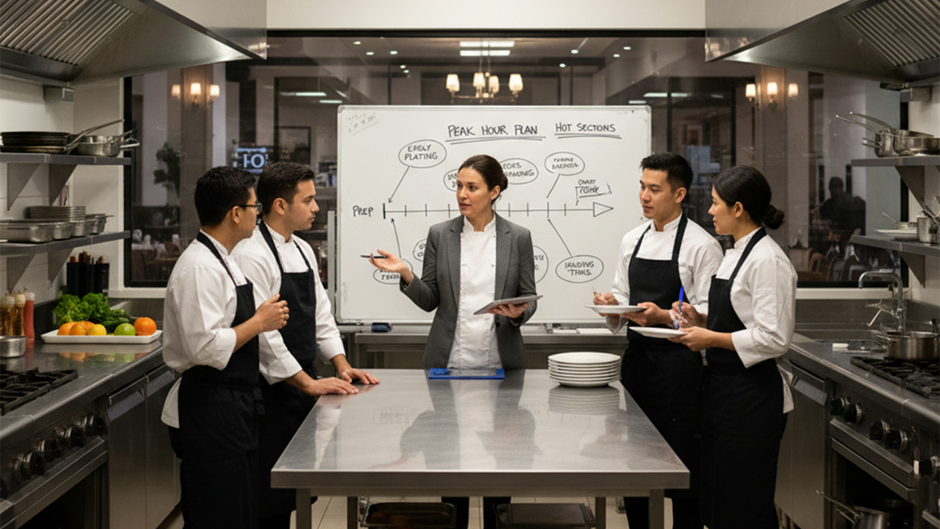
Pre-Shift Huddles in Under 5 Minutes
Forget long, drawn-out meetings. Before the rush, your team just needs one thing: clarity. A tight, five-minute huddle should cover three essentials:
- Tonight’s specials and menu changes.
- Items that are already 86’d, so servers don’t have to backtrack at the table.
- Roles and responsibilities: who’s on expo, who’s floating, and who’s running food.
Think of it as setting the tempo before the music begins. Your team walks away having clear direction, which reduces hesitation and errors once the floor is packed.
Batch-Prepping for Speed
If your cooks are still chopping herbs when the tickets start flying, you’re already behind. High-performing kitchens batch-prep hours before service: pre-mixed sauces, pre-cut garnishes, drink mixes, and pre-portioned proteins for best-sellers. Done right, it saves precious minutes on every ticket coming in and keeps the orders moving smoothly.
The Strategic Stock-up
Nothing kills momentum faster than realizing they’re out of forks or receipt paper mid-rush. Before opening, assign someone to do a “floor walk” and check every station: server side stations, host stands, condiment caddies, and printer rolls. Restocking in advance turns what could have been a fire drill into smooth, invisible service for your guests.
Smarter Staff Scheduling & Roles
If there’s one thing restaurant owners agree on, it’s this: labor costs feel heavier every year, and finding reliable staff isn’t getting easier. The way you schedule for peak hours can either protect your margins or leave you overstaffed, underprepared, and paying for idle hands. Smart peak hour management is about making the most of the people you already have.
Staggered Shifts vs. Block Scheduling
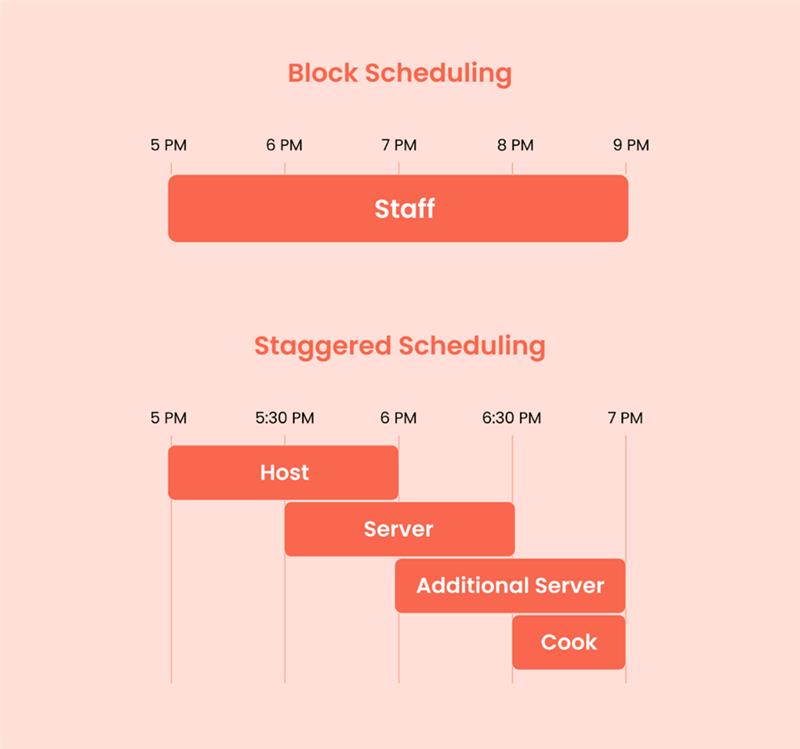
Too many operators fall into the trap of starting everyone at 5 PM sharp. The result is servers standing around during the lull, then burning out when the dining room fills all at once.
Instead, stagger shift timings: have a skeleton crew cover the early trickle, add reinforcements as the dinner wave builds, and overlap only during the busiest window. This way, you’re not overspending early, and you’ve got fresh energy exactly when you need it the most.
The Floater Role
Every restaurant peak hour management has bottlenecks: an expo drowning in tickets, a server double-sat, or bussing falling behind. To ease the pressure on the entire team, assign one experienced member as a floater: a team player whose only job is to plug gaps wherever pressure builds. In one shift they might be running food; in the next, helping the host seat tables. It’s a real lifesaver during unpredictable rushes and helps prevent meltdowns before they start.
Managing Guest Flow Like a Pro
When the dining room is full and the line at the door keeps growing, the difference between chaos and serenity comes down to how you manage guest flow.
Guest experience plays a huge part in effective restaurant peak hour management. A packed house is a great problem to have, if guests feel ignored, crowded, or misled, chances are they won’t be coming back.
Set Appropriate Wait Time Expectations
One of the simplest but most effective tactics is to realistically estimate your wait times. If you quote 30 minutes and seat in 20, guests are delighted. In today’s market, where guests have endless options on delivery apps, setting honest (or slightly padded) expectations builds trust and keeps frustration low.
Keep Overflow Guests Comfortable
If people are waiting, make them comfortable. Offer complementary bar snacks or small bites while guests wait. Set up self-serve water stations so staff don’t get bogged down. Hand menus to waiting guests so they can browse, and order faster once seated.
The goal here isn’t just to keep them patient; it’s to turn waiting into part of the experience.
Delivery App Coordination
Balancing in-house guests and third-party delivery orders at the same time is one of the biggest frustrations for restaurant peak hour management. Nothing tanks a kitchen faster than 40 takeout tickets dropping during rush hour.
The fix: use your platform’s tools to set order caps or extend prep times on your delivery apps during peak hours. It’s better to accept fewer orders and fulfill them flawlessly than to overpromise and disappoint both in-house and online guests.
I Smart operators are also assigning one staff member as the “delivery captain” to manage the flow of off-premise orders and keep them from clogging the expo line.
Keep Orders Flowing Smoothly
During peak hours, every extra minute counts. Slow ticket times frustrate guests and have ripple effects throughout the whole operation.
They create bottlenecks at the bar, delays in the kitchen, and rushed checkouts that cut into table turns. The secret to staying ahead of the curve is tightening the flow of orders and payments so nothing gets jammed.
Simplify Peak-Hour Menus
More restaurants are leaning into a trend that works: trimming the menu down during high-volume windows. Spotlight your top sellers and high-margin items and temporarily hit pause on complex dishes that slow down the line.
Guests rarely notice the missing items, but they always notice when food arrives quickly and consistently. A leaner peak-hour menu keeps service smooth, your team focused, and your service quality stronger.
Don’t Forget Staff Morale
Peak hours don’t just test your systems; they test your people. And in today’s labor market, where turnover is brutal and finding good help is harder than ever, maintaining high morale during the rush is just as important as moving tickets.
A team that feels valued will push harder, smile for longer, and come back for the next shift ready to do it all over again.
Micro-Breaks in the Rush
Rotate quick breaks through the team so no one hits a wall mid-service. Even 2–3 minutes to grab water, step outside, or reset between waves can keep burnout at bay. It’s a small investment that pays off in restored energy and focus.
Recognition Post-Shift
At the end of a rush, your staff is sweaty, tired, and sometimes frustrated. A few words of recognition go further than you think. Highlight who jumped in to help, who handled a tough table, or who kept cool when things got chaotic. Small shoutouts build loyalty, and loyal staff stick around for longer.
After the Rush: Reset for Next Time
Post-service routines are a critical but often overlooked part of restaurant peak hour management. Surviving the rush is only half the job. How you wrap up sets the tone for the next day.
Too often, restaurants limp out of peak hours exhausted and leave problems for the next shift. The operators who win long-term are the ones who take 15 extra minutes to reset, reflect, and get ready for the next wave.
Quick Debrief with Your Staff
Before everyone clocks out, pull the team together for another two-minute huddle. Ask three questions: What worked? What didn’t? What can we do better next time? This practice maintains a learning loop that makes every shift smoother than the last.
Restock Stations Immediately
Don’t hand tomorrow’s crew an empty ice bin or a printer out of paper. Restock cutlery, napkins, condiments, and prep basics while the night is still fresh. It’s faster to do it now, and it keeps your morning shift from starting behind.
Track Issues
Keep a simple log of sales peaks, bottlenecks, and menu items that 86’d too soon. Over time, this data tells you exactly where to adjust staffing, prep, or menu planning. This turns restaurant peak-hour management into a controlled set of patterns you can recognize and follow.
Smarter Systems for Peak Hour Success
Even the best manual systems can only take you so far. When rush hours hit, what separates top-performing restaurants is how seamlessly their tools talk to each other. That’s where smarter, all-in-one platforms like AIO come in, bringing together scheduling, staffing, orders, and guest management under one roof.
No more flipping between tabs, guessing schedules, or hoping the kitchen keeps up. AIO keeps everything connected from kitchen screens to mobile POS so your team can stay focused on what really matters: getting great food out fast and keeping guests happy.
Final Thoughts
Peak hours don’t have to feel like a storm you survive every time. With the right prep, staff flow, and guest management, they can become the most profitable and energizing part of your week.
If you’re ready to take it further, from faster payments to integrated kitchen displays, AIO brings every tool into one platform to make restaurant peak hour management easier than ever. That way, instead of worrying about bottlenecks or burnout, you and your team can stay focused on what really matters: serving guests quickly, consistently, and with the kind of energy that is remembered for days on end.